Ground improvement in Anchorage, Alaska, encompasses a suite of geotechnical techniques designed to enhance the engineering properties of soil and fill materials that are otherwise unsuitable for construction. This category addresses the critical need to increase bearing capacity, reduce total and differential settlement, mitigate liquefaction potential, and control groundwater. In a city where development is constrained by the surrounding Chugach Mountains and the waters of Cook Inlet, the ability to build safely on marginal ground is not just a convenience; it is essential for the economic and infrastructural resilience of the community. From the deep, soft clays of the Bootlegger Cove Formation to loose, saturated alluvial sands, the variable subsurface conditions demand a strategic approach to soil modification, making ground improvement a foundational step in virtually every major civil engineering project.
The geology of the Anchorage bowl is dominated by complex glacial and interglacial deposits, which create challenging conditions for foundation engineers. The infamous Bootlegger Cove Formation, a glaciomarine clay, is particularly notorious for its high sensitivity and potential for large-scale instability, a lesson tragically underscored by the 1964 Great Alaska Earthquake. Across the city, loose sands and silts with shallow groundwater tables present a significant liquefaction hazard. These local conditions mean that conventional shallow foundations are often infeasible, and deep foundations like driven piles can be prohibitively expensive or technically difficult. Consequently, a thorough understanding of these glacial stratigraphies is the starting point for selecting an appropriate ground improvement method, ensuring that the solution is tailored to the specific geohazards present at the site.
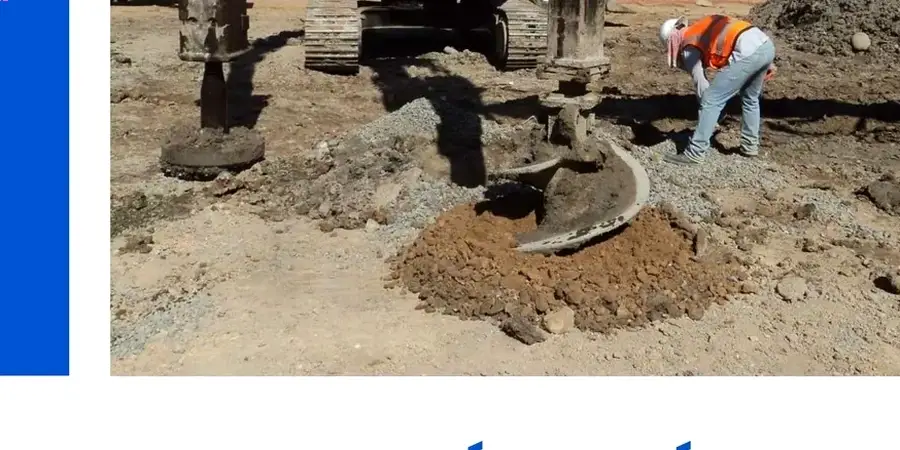
All ground improvement work in the Municipality of Anchorage is governed by the locally adopted International Building Code (IBC) with specific Alaskan amendments, alongside the Anchorage Municipal Code. A comprehensive geotechnical investigation, conforming to the standards of the American Society of Civil Engineers (ASCE) and ASTM International, is mandatory to characterize subsurface conditions and justify the chosen improvement technique. Design is typically based on the load and resistance factor design (LRFD) framework outlined in AASHTO specifications for transportation projects, or allowable stress design (ASD) for commercial buildings, with strict adherence to seismic design categories reflecting the region's high seismicity. Special inspections and performance verification, such as post-treatment cone penetration testing (CPT) or pressuremeter tests, are legally required to validate that the design criteria for strength and settlement have been met before construction can proceed.
The diverse infrastructure needs of Anchorage call for a wide range of ground improvement applications. Large-diameter stone column design is frequently employed to support embankments and heavily loaded structures over thick deposits of compressible clay, acting as both reinforcement and drainage elements. For loose granular soils with a high liquefaction risk, dynamic compaction design offers a cost-effective solution by densifying the ground through controlled high-energy impact. Where the primary goal is to accelerate the consolidation of soft, saturated clays under an applied load, prefabricated vertical drain (PVD) design is a critical service, often combined with preloading with surcharge design to achieve settlement within a strict construction timeline. These techniques are vital for projects ranging from Port of Alaska modernization efforts and highway interchanges to commercial real estate developments in areas like Midtown and Tikahtnu.
Available services
Stone column design
→ Ver detalleDynamic compaction design
→ Ver detalleGeotechnical drainage design
→ Ver detallePrefabricated vertical drain (PVD) design
→ Ver detalleGrouting design
→ Ver detalleJet grouting design
→ Ver detallePreloading design (without surcharge)
→ Ver detallePreloading with surcharge design
→ Ver detalleVibrocompaction design
→ Ver detalleGeogrid specification
→ Ver detalleGeotextile specification
→ Ver detalleLime and cement stabilization
→ Ver detalleLandfill geotechnics
→ Ver detalleGeotechnical instrumentation (design and installation)
→ Ver detalleOrganic soil management
→ Ver detalleContaminated soil remediation
→ Ver detalleFrequently asked questions
What are the main goals of ground improvement in Anchorage?
The primary goals are to mitigate the unique geohazards of the Anchorage bowl. This includes increasing bearing capacity of weak clays like the Bootlegger Cove Formation, eliminating the risk of liquefaction in loose saturated sands during a major seismic event, and controlling both total and differential settlement to protect structures. The overarching objective is to make marginal, otherwise unbuildable land suitable for safe, long-term construction.
How do Anchorage's local soil conditions influence the choice of a ground improvement method?
The local geology, dominated by sensitive glaciomarine clay and liquefiable alluvial deposits, dictates the technical approach. For deep, soft clays, methods focusing on reinforcement and drainage like stone columns or PVDs with preloading are preferred. In contrast, loose granular zones with high groundwater are often treated with vibro-compaction or dynamic compaction to directly densify the soil and dissipate pore pressures.
What performance verification is required after ground improvement work in Anchorage?
Local building codes and standard engineering practice mandate rigorous post-treatment verification. This typically involves in-situ testing such as cone penetration testing (CPT), standard penetration testing (SPT), or pressuremeter tests to confirm that design parameters for strength and stiffness have been achieved. The results are compared directly with the pre-treatment baseline to quantitatively validate the improvement and ensure compliance with the project's geotechnical specifications.
Is ground improvement a cost-effective alternative to deep foundations in Anchorage?
Yes, often significantly. While the initial mobilization and design can be intensive, ground improvement frequently eliminates the need for thousands of deep, expensive driven piles and the associated heavy structural grade beams. By transforming the ground into a reliable foundation medium, projects can use conventional shallow foundations, leading to lower overall construction costs and reduced schedules, especially on large-footprint structures and embankments.