The 'Slopes' category encompasses a comprehensive range of engineering analyses and designs aimed at ensuring the stability and safety of natural and man-made slopes. In Anchorage, Alaska, this discipline is critical due to the region's unique combination of steep terrain, seismic activity, and extreme weather patterns. Proper slope management directly protects infrastructure, property, and lives from the consequences of landslides, erosion, and debris flows. Our services in this category include detailed assessments like soil erosion analysis and slope stability analysis, which form the foundation for effective mitigation strategies.
The local geology of Anchorage is dominated by glacial deposits, including till, outwash sands, and lacustrine clays, overlying bedrock formations. These materials are often sensitive to changes in moisture content and can exhibit significant strength loss when disturbed. Additionally, the region lies within a high-seismicity zone, where earthquakes can trigger catastrophic slope failures. Permafrost degradation in certain areas further complicates slope behavior, making site-specific investigations essential for accurate predictions and designs.
Engineering practice in the United States, and specifically in Anchorage, is governed by standards such as the International Building Code (IBC) and local municipal codes that reference guidelines from the American Society of Civil Engineers (ASCE) and the Federal Emergency Management Agency (FEMA). For slope projects, compliance with the Alaska Administrative Code (AAC) and the Municipality of Anchorage's Title 21 (Land Use Planning) is mandatory. These regulations mandate rigorous analyses, including factor of safety (FS) calculation, to ensure that slopes meet minimum stability criteria under static and seismic loading conditions.
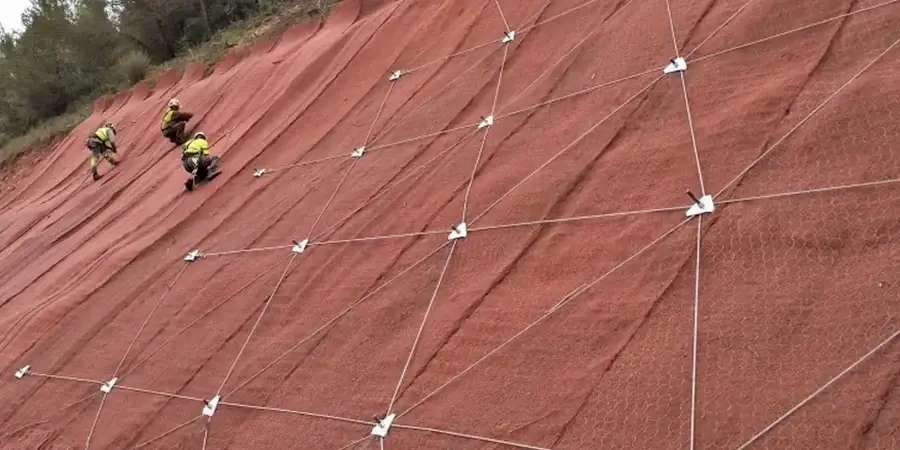
Projects requiring specialized slope services include residential developments on hillsides, road and highway cuts along the Seward Highway, mining operations in the Mat-Su Valley, and large-scale infrastructure such as the Port of Anchorage. Environmental restoration projects along coastal bluffs and riverbanks also benefit from our expertise. Each project type demands tailored approaches, from debris flow analysis in steep drainages to geocell design for surface erosion control on fill slopes.
Available services
Soil erosion analysis
→ Ver detalleSlope stability analysis
→ Ver detalleSlope failure analysis
→ Ver detalleDebris flow analysis
→ Ver detalleFactor of safety (FS) calculation
→ Ver detalleGeocell design
→ Ver detalleSlope stabilization design
→ Ver detalleRetaining wall design
→ Ver detalleMSE (Mechanically Stabilized Earth) wall design
→ Ver detalleDiaphragm wall design
→ Ver detalleSheet pile wall design
→ Ver detalleLandslide assessment
→ Ver detalleFrequently asked questions
What are the primary causes of slope instability in Anchorage?
Slope instability in Anchorage is primarily caused by heavy rainfall, snowmelt, seismic shaking from earthquakes, and human activities such as excavation or fill placement. The region's glacial soils, which are sensitive to water and vibration, significantly increase the risk of landslides and slumps.
How does seismic activity affect slope stability in this region?
Seismic activity can dramatically reduce the factor of safety of slopes by generating inertial forces and causing liquefaction in loose, saturated soils. In Anchorage, earthquakes like the 1964 Good Friday event have triggered widespread landslides, making seismic slope stability analysis a standard requirement for all major projects.
What regulations govern slope design and construction in Anchorage?
Slope design in Anchorage must comply with the International Building Code (IBC), local Title 21 land use regulations, and the Alaska Administrative Code. These regulations require geotechnical reports, stability analyses, and erosion control plans, with specific guidelines for cut and fill slopes in residential and commercial developments.
Can slope stability be improved without building retaining walls?
Yes, slope stability can be enhanced through methods such as soil nailing, geocell reinforcement, drainage improvements, and vegetation. These approaches reduce erosion and increase shear strength without the need for traditional retaining walls, often offering more cost-effective and environmentally friendly solutions for certain slopes.